Made in Ghana: Afya’s Klosset
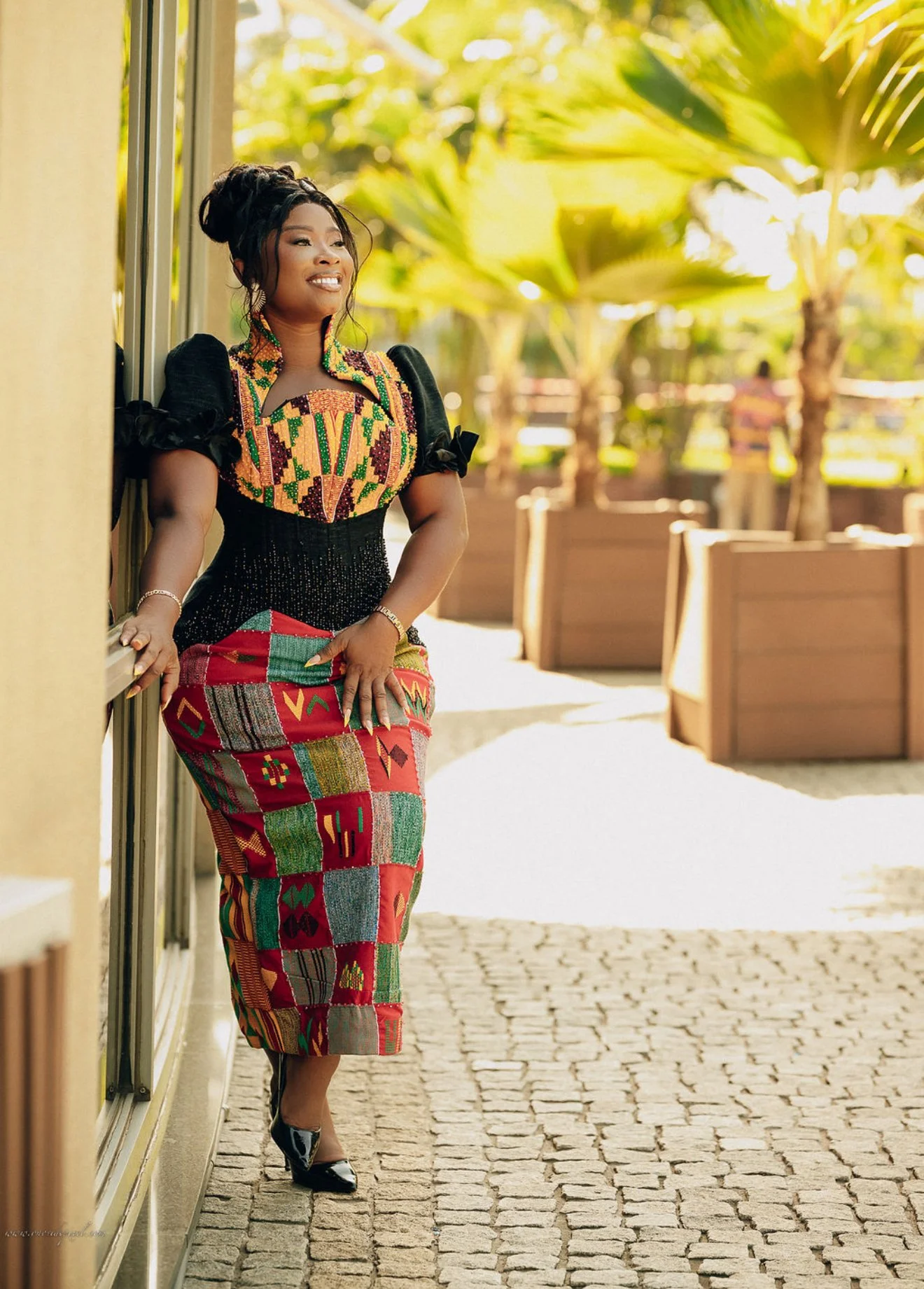
What was once admired from a distance is now being worn with pride. Today, kente is no longer confined to tradition — it is being styled, reworked, and embraced in contemporary ways by a new generation. Afya Serwaa of Afya’s Klosset reflects on her journey into the kente trade and the renewed cultural confidence shaping how the fabric is worn today. “At the end of the day, kente is not just a cloth. It is a fabric of celebration.”
Background: Admittedly, until about 2 years ago, kente was something I admired from afar. Growing up, I would see it at traditional weddings and the occasional big event but in my eyes it was very much something for grown folks only. I can probably count on my hands the amount of times I have seen my parents both wearing kente and you cannot compare that number to the amount of times I have seen them in ntama (which probably says more about how many funerals Ghanaians attend than anything else!).
Recently, though, I’ve started looking at kente differently. I’ve worn it twice now, first for my brother-in-law’s wedding, then for my own wedding gown, and it’s opened up this whole desire to explore Ghanaian fabrics more intentionally. Even my sister is considering wearing our local fabrics for fancy work events and film premieres now.
Back in May 2025, I visited Afya’s Klosset in Pantang, where with the help of my kente gown designer, I chose the most beautiful red kente for my husband and I. With a store the size of a decent-spaced living room, Afya stocks a vast array of kente in an array of colours, patterns and threads counts, keeping brides and grooms in Ghana (and honestly, scattered across the diaspora) beautifully dressed in this rich fabric.
Earlier this month, I sat down with Afya herself. We talked about how she found her way into the kente business, how younger Ghanaians are embracing the fabric in new ways, and what kente means for our cultural identity.
The timing felt especially right: Ghana officially secured IP protection for kente cloth in September 2025, making this a particularly topical and insightful conversation.
This interview has been edited for clarity.
Full Name: Ernestina Serwaa Oware
Age: 34
Business: Afya’s Klosset
Based: Pantang , Accra, Ghana
Q: How did you get into the kente trade?
So I always tell people that I come from a very business-oriented family and my interest in business started from childhood.
When I was about eight years old, my family was selling kerosene in Nankese in the Eastern Region. At the time, electricity was rare in the area, but we were fortunate to be one of the first families to get connected. Because we had a fridge, we decided to start selling chilled water to people in the community and I helped out whenever I could. I’ve never liked being idle, so being involved in small businesses felt natural to me.
After I completed JHS and was waiting for my results, I started petty trading and ran a small popcorn business. Even after SHS, that entrepreneurial spirit stayed with me. My mum had a provision shop and I noticed customers often bought items like milk, Milo, and bread. When some began asking for eggs, I saw an opportunity and started selling eggs as well. By then, business was already a part of who I was.
Career-wise, I am a banker but the kente business truly took off after my national service, when I was around 23 or 24. One day a friend gifted me some kente, I wore it to a wedding and the compliments were endless, people kept asking where I got the kente from, who made my dress and how they could get one too.
That’s when my business mind kicked in. I asked my friend where she got the kente, reached out to the supplier and started connecting people to the fabric, adding a small margin for myself. People loved it, and more and more enquiries started coming in. At first, I worked with the same supplier my friend had used, but as demand grew, I decided to go straight to the source. I traveled to Kumasi to connect directly with weavers.
By the grace of God, that journey and those small beginnings have grown into what is now Afya’s Klosset.
Q: Where does kente originate from?
Kente comes from Ghana and honestly, the story behind it is pretty cool. There’s some back and forth about whether it originates from the Akan people or the Ewe people, but it’s very strongly tied to the Ashanti (Asante) community and their history.
One popular folk tale says that two brothers were walking through the forest and noticed a spider weaving its web. They were really taken by how detailed and beautiful the web was and that’s what inspired them to try weaving patterns like that themselves. That idea eventually turned into what we now know as kente cloth.
Even the name has a simple meaning behind it. Kente comes from the Twi word kenten, which means “basket,” because of how the cloth looks when it’s woven together.
Q: How is kente made?
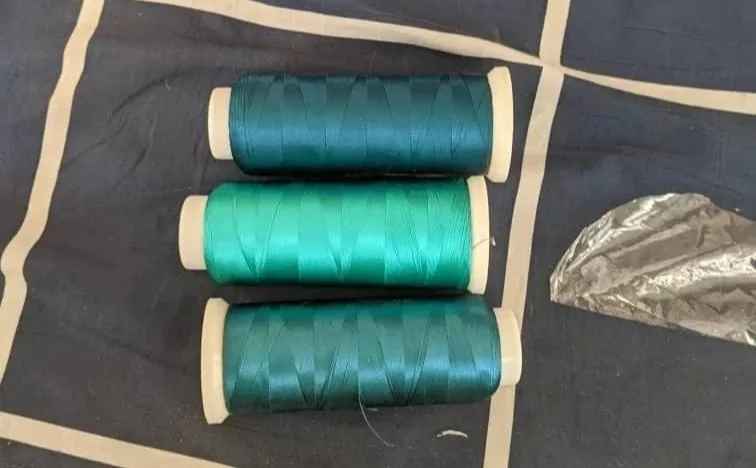
Kente is made in a pretty hands-on way. Basically, you need three main things: a loom, threads, and shuttles. The threads can be different types too – silk, rayon, or cotton – depending on the look and feel you’re going for.
The weaver uses those threads to make long, narrow strips, usually about 4 to 6 inches wide. Once those strips are done, they’re laid next to each other and stitched together. That’s when you really start to see the cloth come to life, with all the colours and patterns coming together. If you walk into a kente shop, all the different designs you see are made from how those strips are arranged and combined.
The whole process starts by hand, with the loom worked using both hands and feet. It takes a lot of skill, this isn’t something just anyone can do. A good kente weaver has to be really sharp and experienced because the patterns are technical and very precise. Without a skilled artisan behind it, kente simply can’t be made.
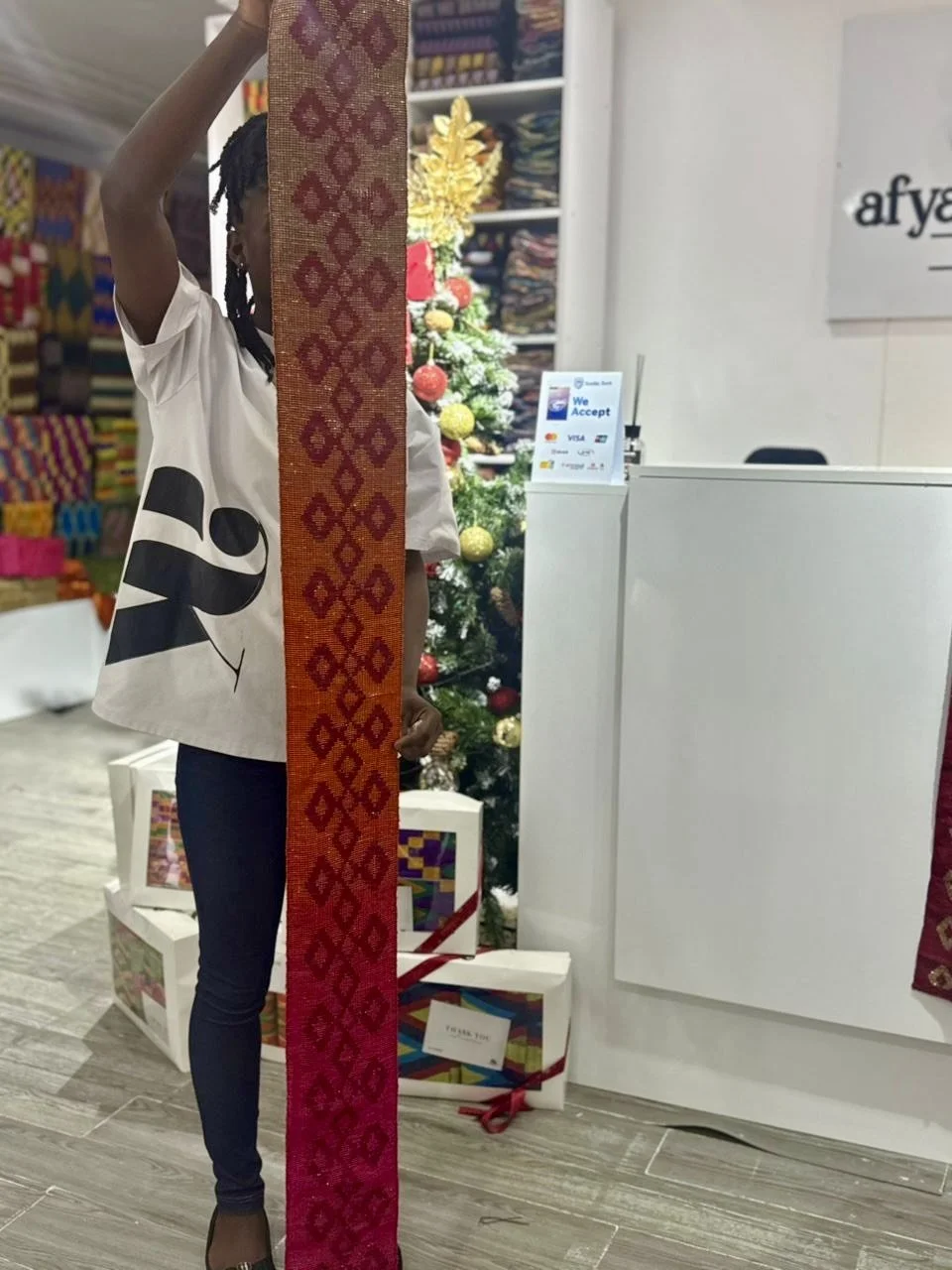
Example of a kente strip from Afya’s Klosset.
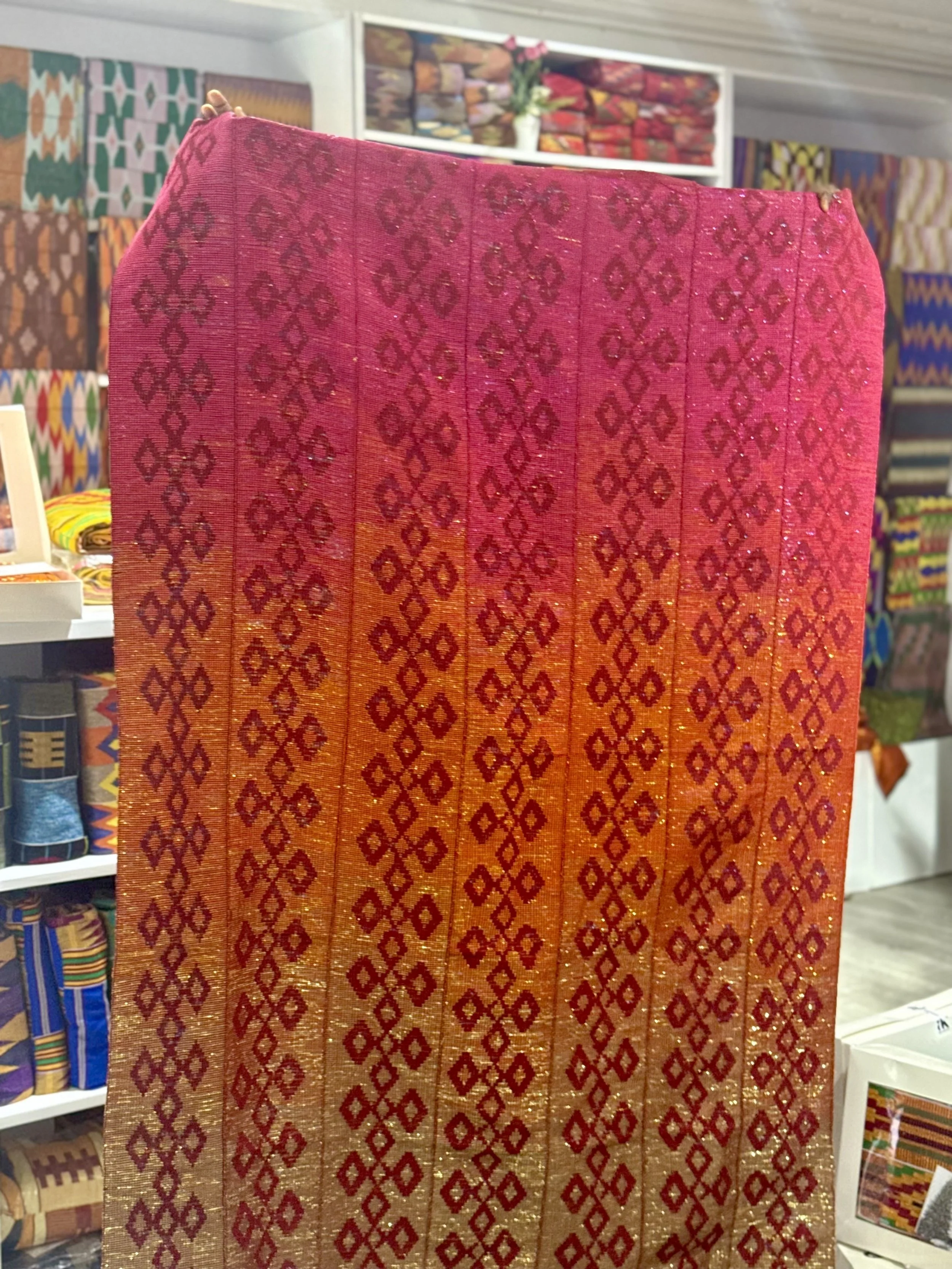
Example of the full cloth once the strips have been sewn together.
Q: How do you work with the weavers?
When it comes to working with the weavers, it’s very hands-on and collaborative. If a custom order comes in, we sit down and really go through everything with the weaver, especially the colours the customer wants. Together, we figure out patterns that will meet those exact specifications. One thing that really sets us apart is that we don’t compromise on quality at all. If something isn’t up to our standard, it goes straight back to the loom.
Before any weaving even starts, we make sure everything the customer wants is clearly explained – colours, patterns, all of it – so there’s no confusion later. Usually, a sample is made first and brought back to the shop for approval. We also make it a point to pay the weavers fairly, because when people are treated well, the work shows.
Because of the kind of work we do, a lot of our patterns are unique and need to be made quickly, so logistics matter. Instead of keeping our weavers in places like Kumasi or Bonwire, which are far, we have them based on the outskirts of Accra. They lodge there and we have a supervisor who oversees about 15 weavers on the looms. That way, if anything comes up, we can easily drive over and handle it. Keeping them close just makes everything faster and smoother.
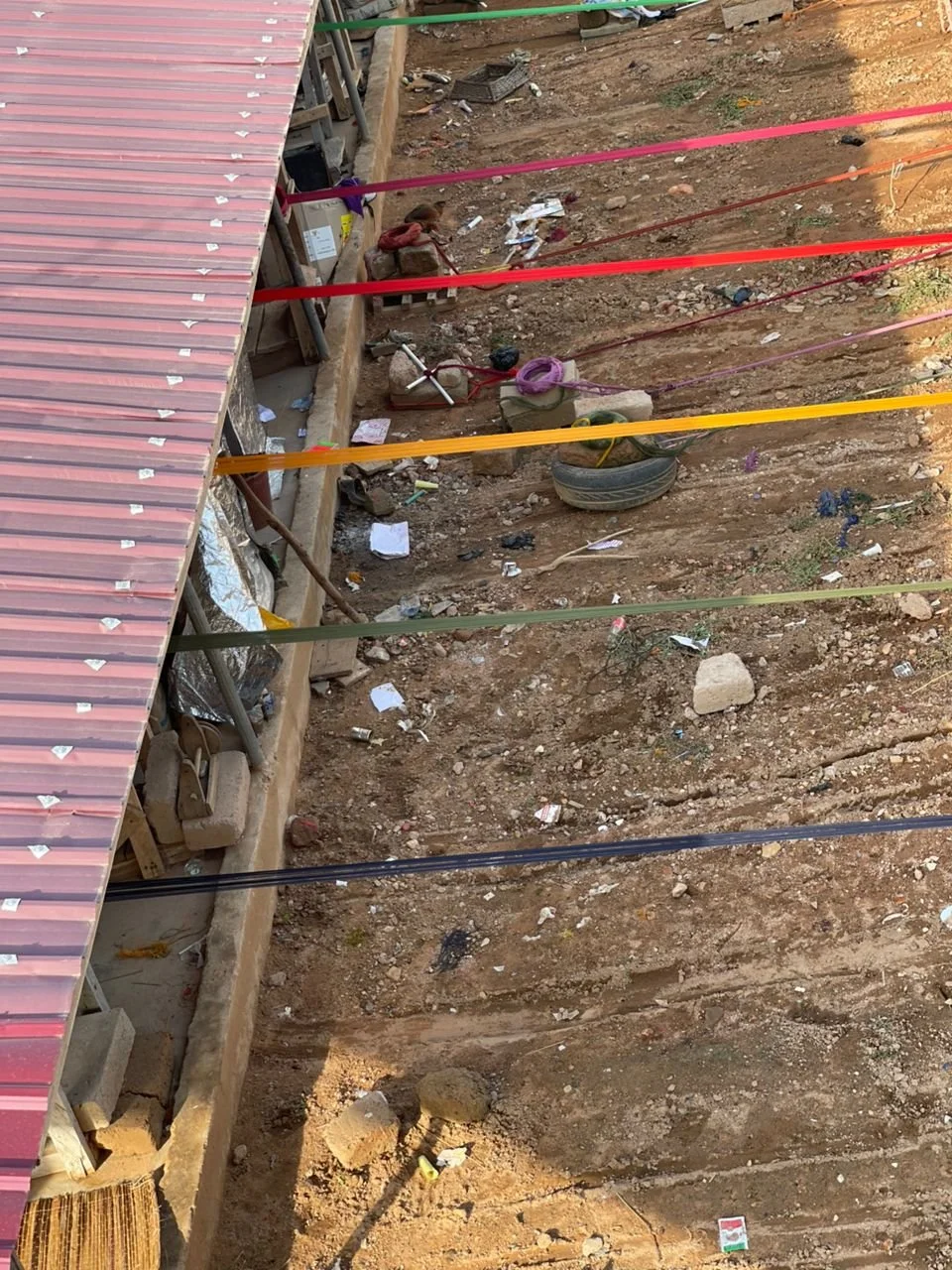
Loom
Threads
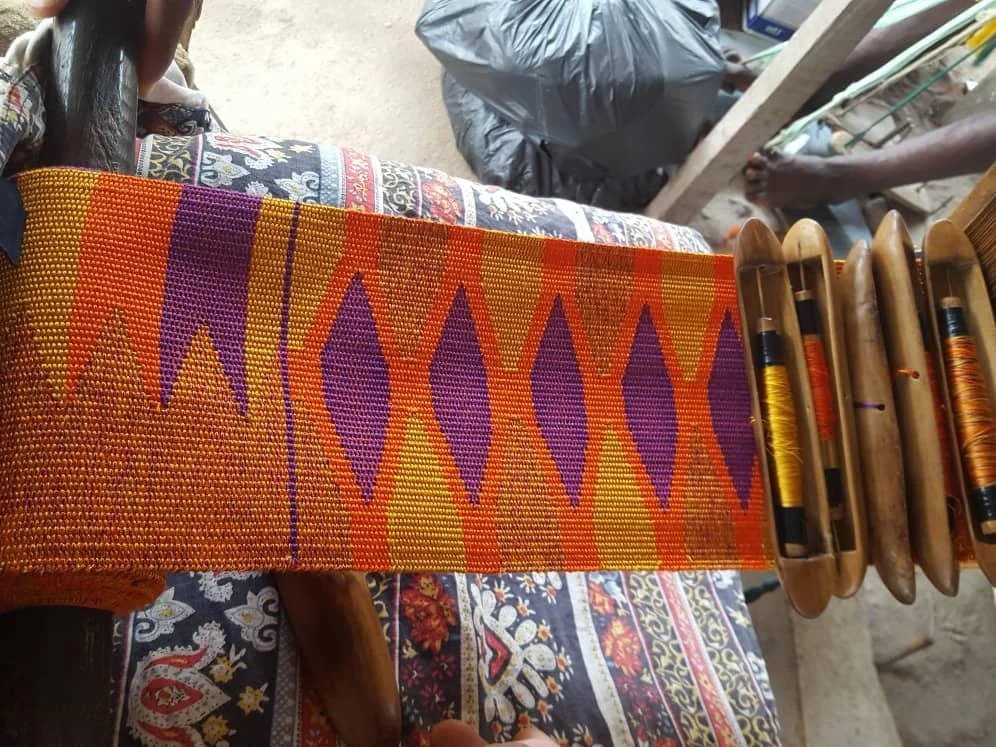
Shuttles
Q: Out of curiosity, when people are getting married, do they usually want a custom kente made, or are they happy choosing from the designs you already have in the shop?
Most people just want to stand out, especially for weddings. This year, about 50% of our clients went for fully custom orders and the other half were happy coming into the shop and choosing from what we already had.
Our designs are very unique and we’re quite intentional about that. We don’t post everything on social media, so sometimes someone will come in, see a design, and ask if it’s been posted yet. When we tell them no, they’re usually quick to buy it because they know not many people will have it.
Other times, someone comes in asking for a custom kente in specific colours. The first thing I do is check what we already have in stock that matches what they’re looking for. A lot of the time, they end up loving what’s already there and go with that instead. So it really depends, but in the end, everyone wants something that feels special and different.
Q: For my wedding, my dad wore a kente style called Obama and my grandma wore Fatia Fata Nkrumah. Could you talk us through some of the different types of kente and what they actually mean?
Kente names usually come from stories, moments in history, or what the cloth represents, so each one carries meaning beyond just how it looks.
Take Fatia Fata Nkrumah, for example. Originally, that cloth was called Baako Mmu Man, which means “one person does not govern a nation.” But when Fatia, Dr. Kwame Nkrumah’s wife, wore the cloth, people were struck by how beautiful and elegant she looked in it. Everyone kept saying, “Fatia fata,” meaning “Fatia, it really suits you.” Over time, the name stuck, and it became Fatia Fata Nkrumah – almost like saying, “Fatia, you suit Nkrumah.”
Then there’s Sika Futuro, which means “gold dust.” This one symbolises royalty, wealth, and elegance. It’s the kind of kente that really speaks to status and refinement.
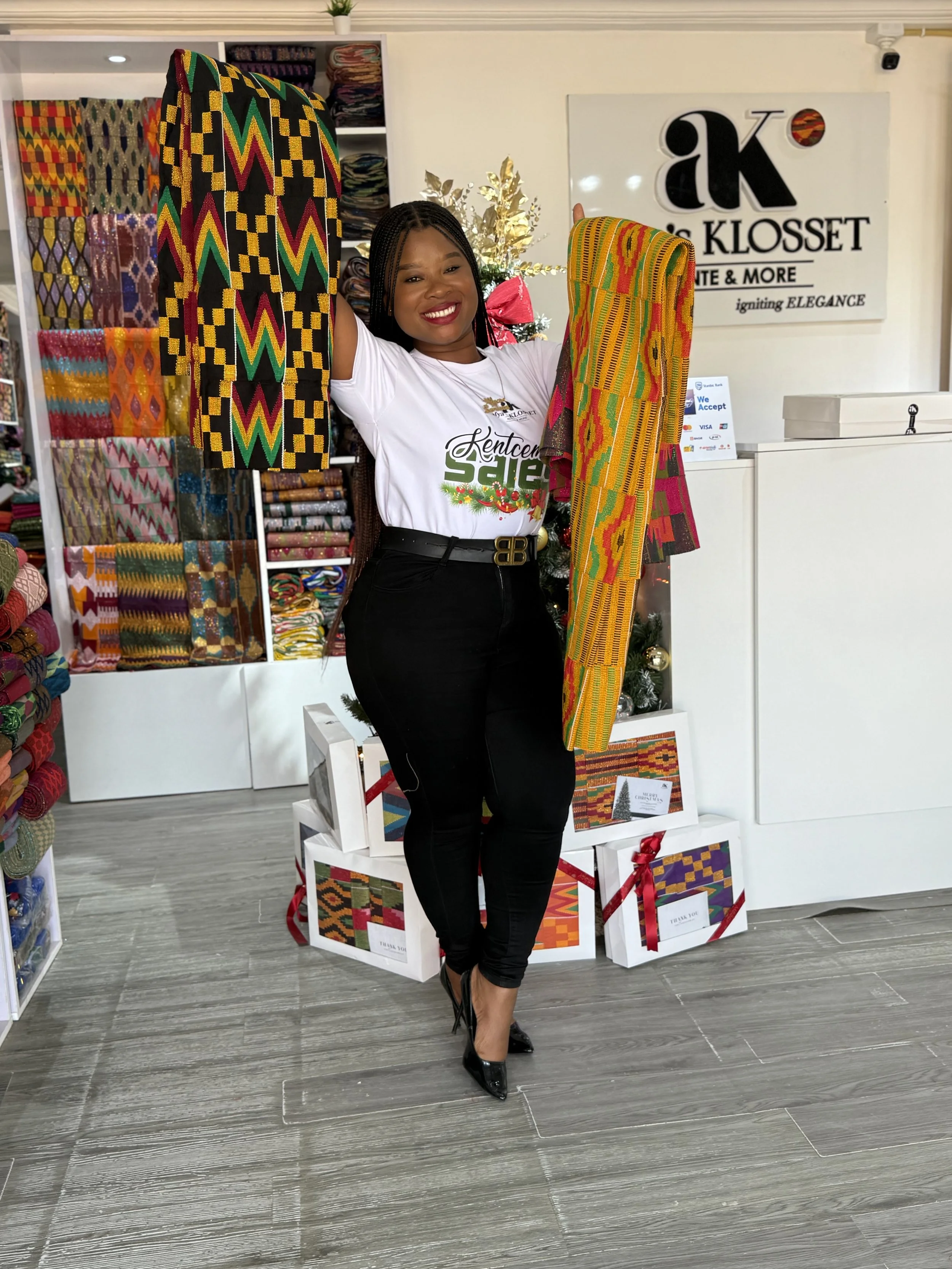
Example of Fatia kente (left) and Sika Futoro kente (right).
Abusua Ye Dom means “the extended family is a force.” This kente is all about unity, strength in togetherness, and the importance of family – something that really resonates at weddings.
Adwinasa has one of the best stories. The name means “all thoughts are used up.” According to legend, a weaver wanted to create a cloth so special that it would impress the Asantehene. He used every motif he knew in one single cloth, and by the end he felt he had exhausted all his ideas. Even though he thought he had nothing left to give creatively, the cloth turned out incredibly beautiful. That’s why it’s called Adwinasa.
And then there’s Obama. Its original name is Akunini, which means “a person of importance.” Historically, this cloth was worn by kings, chiefs, and dignitaries. It’s heavy, bold, and very striking – definitely not an everyday kente. When President Obama visited Ghana, this was the cloth people wore to welcome him, and from that moment people just started calling it Obama kente.
That’s actually how many kente names come about. If, for example, everyone wore a particular kente to your wedding, people might later say, “We want Amanda’s kente” or “the kente from Amanda’s wedding.” That moment gives the cloth a new identity. And that’s why Obama kente remains so popular as it’s tied to a powerful moment and a person of significance.
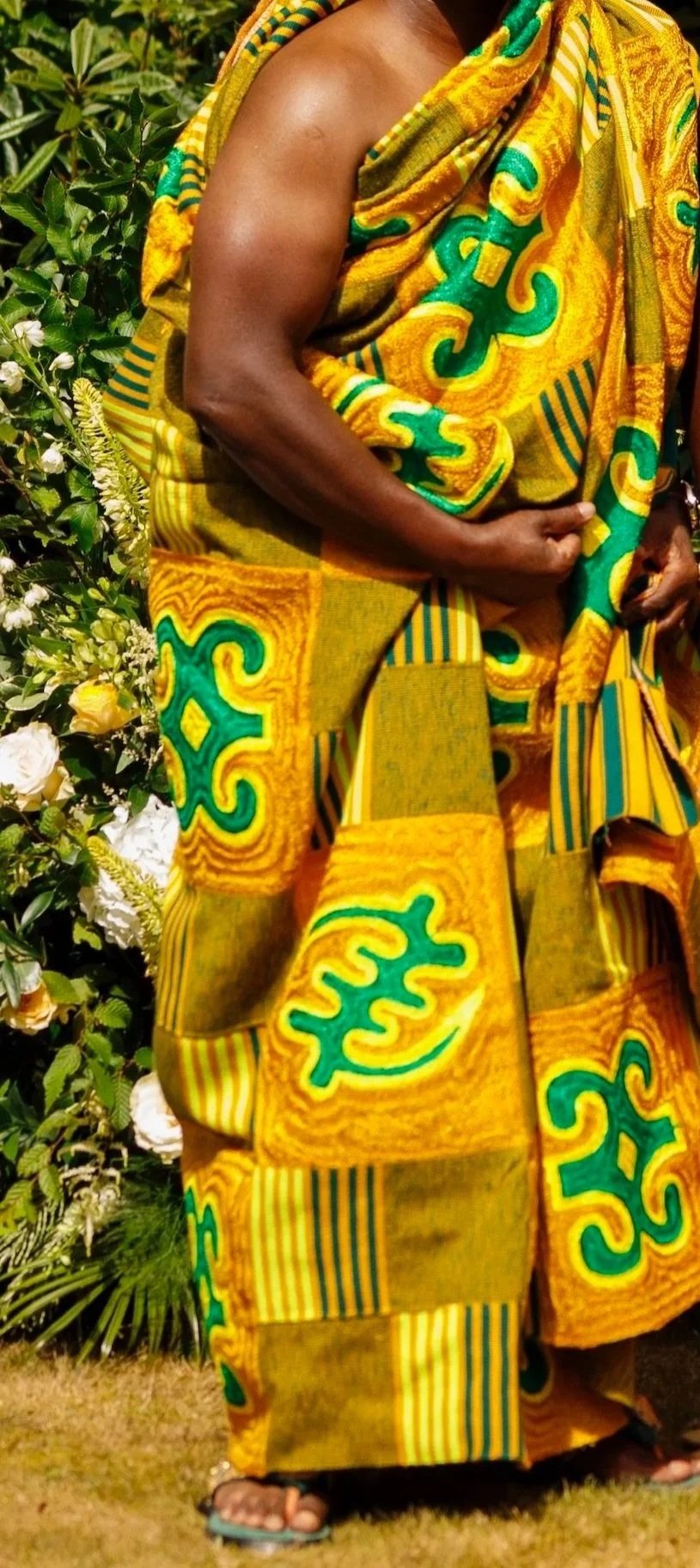
Picture of a Father of the Bride in an Obama kente.
Q: Who are your main customers – locals, diaspora, international buyers?
Nowadays, our customer base is quite diverse. We serve a mix of local Ghanaians, members of the diaspora and international clients. Essentially, anyone who appreciates African culture, heritage and textiles is part of our audience. Our clients are not limited to one location or background – kente is now embraced globally and people from all over the world are patronising it.
Q: Have you noticed shifts in how younger Ghanaians engage with kente (weddings, graduations, festivals)?
Yes, definitely! You can really see a shift in how younger Ghanaians are engaging with kente now, it’s being rediscovered and celebrated in fresh ways. A lot of this comes down to modernisation. For example, at graduations you’ll see people wearing kente dresses, but they’re often mixed with other fabrics like lace or styled in more contemporary silhouettes. It’s all about reimagining what our traditional fabrics can look like today.
I think this shows a bigger cultural revival happening. People are reclaiming their identity and proudly saying, “I’m Ghanaian.” There’s a renewed appreciation for where we come from, and that pride is influencing how kente is worn at weddings, festivals, and other major milestones. It’s not just happening locally either, you see the diaspora embracing it too. Instead of choosing only lace or Western fabrics, people are intentionally incorporating kente as a way of celebrating and honouring their Ghanaian roots.
Q: How do you feel about the recent news that Ghana has secured the IP protection for kente cloth? What does this development mean for your business and the industry as a whole?
It’s honestly a game changer. Ghana securing IP protection for kente means so much, not just for my business but for the entire industry. First of all, it helps ensure that kente remains authentic and truly Ghanaian. It stops people from bringing in imitations and passing them off as kente – something that locals might spot immediately, but international buyers may not be able to tell apart.
This protection helps prevent counterfeit kente from entering the market and gives customers confidence that what they’re buying is the real thing. Ideally, only licensed kente sellers should be able to sell kente and that would really help businesses like mine by boosting credibility, increasing demand, and ultimately improving sales.
At its core, this move strongly supports local artisans. These weavers are incredibly creative, and when you visit the looms and see what they produce, it’s truly impressive. Unfortunately, without fair structures in place, many of them earn very little. By protecting handwoven Ghanaian kente and limiting the market to authentic products, demand for their work will increase, which can lead to better livelihoods.
Overall, this development promotes our culture, protects our heritage, supports artisans, and boosts the economy. It’s about safeguarding kente from counterfeits and making sure the benefits stay within the communities that create it.
Q: How has the rise of social media changed your business?
Social media has honestly done me more good than harm. I started my kente business in my single bedroom around 2020. I’m a banker by profession and people would literally come to my house to buy kente, mostly because they found me through social media. For almost three years, I ran the business entirely from my room. It really shows that you don’t need a big shop to start a vision. With God by your side, anything is possible.
Without social media marketing and publicity, how would anyone even know there was a kente shop in Pantang to visit? Social media gave me visibility from day one. It also opened doors for collaborations with celebrities, once they wear your pieces and tag you, it really helps cement your place in the market and makes it clear who you need to reach to grow your brand.
It’s also helped me market strategically. For example, during graduation season, I target schools directly, offer discounts, and explain to students that kente speaks to our culture – it represents boldness, excellence, and richness. You’ll notice a lot of people now wearing the black Fatia Fata Nkrumah kente, and I’ve even suggested that the President consider it as a national cloth.
What’s amazing is that many of my customers have been with me since the very beginning, all thanks to social media. It has truly been a great equalizer, small businesses like mine can now compete with bigger brands because our visibility is no longer limited.
My business is called Afya’s Klosset – Kente and More. The name reflects my love for culture and fashion. “Klosset” represents a full wardrobe or showroom – you should be able to get everything you need to style your kente, from accessories to custom designs. We work with designers as well, and this is just the beginning. There’s so much more coming soon.
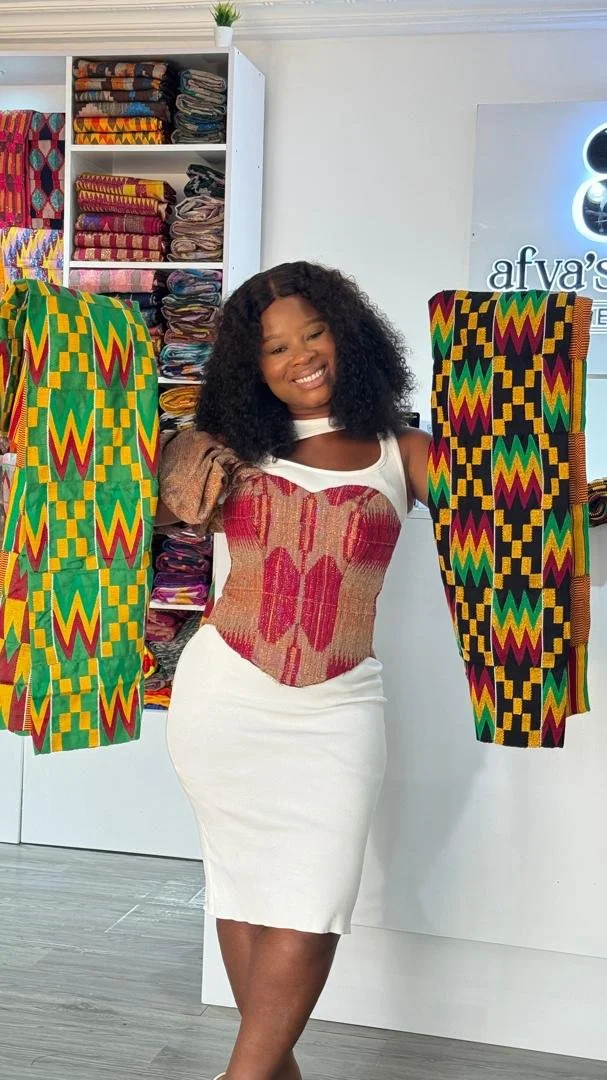
Examples of Fatia Fata kente in green (left) and black (right).
Q: In your view, what has caused the shift in how kente is seen, now black people across the diaspora are really embracing it, why do you think that is?
I think the shift is really about people wanting to revive and reconnect with their culture. There’s a renewed interest in African heritage, and Ghana in particular has become a strong symbol of culture, pride, and identity. For many people across the diaspora, embracing kente is a way of reviving themselves as Africans and reconnecting with where they come from.
Kente also makes you stand out. When you take it out into the world, it instantly gives you a sense of uniqueness and pride. It’s bold, it’s beautiful and it tells a story. Social media has played a huge role in this shift too, people see celebrities wearing kente, and it sparks admiration. It’s exciting to see how well it’s being styled and celebrated globally.
You now see kente being worn at weddings, with not just the couple but even the guests fully showing up in kente. And it’s not just Ghanaians – people from Nigeria, Cameroon, Tanzania, and beyond are reaching out for kente, largely through social media, which has helped us market it across borders.
Celebrity moments have also made a big impact. When someone like Idris Elba visited Ghana and wore kente, interest shot up. People would come to us saying, “I want the kente Idris was wearing.” Moments like that spark curiosity, admiration, and a deeper appreciation for kente, and they continue to inspire more people across the diaspora to embrace it.
Q: Speak to me about the rise of ombré kente and have you found that people prefer it especially for their bridal gowns over the heavier prints?
Ombré kente has really taken off and honestly, it’s what a lot of people are going for now especially for bridal gowns. It offers a modern take on traditional kente and that’s a big part of its appeal. The softer colour transitions feel fresh and stylish, and they tend to make the fabric feel lighter and more youthful compared to some of the heavier, more traditional prints.
Younger people especially love it, but interestingly, even some Mothers of the Bride often ask for ombré kente because it feels “pretty”. It’s still kente, but with a modern twist, and that balance is what’s drawing more people towards it. It feels less formal or mature, yet still very rich in culture.
Fashion designers have played a big role in this rise too. The way they style and sew ombré kente really brings it to life and makes people want to patronise it more. On top of that, it’s quite simple and comfortable to wear, which makes it even more attractive.
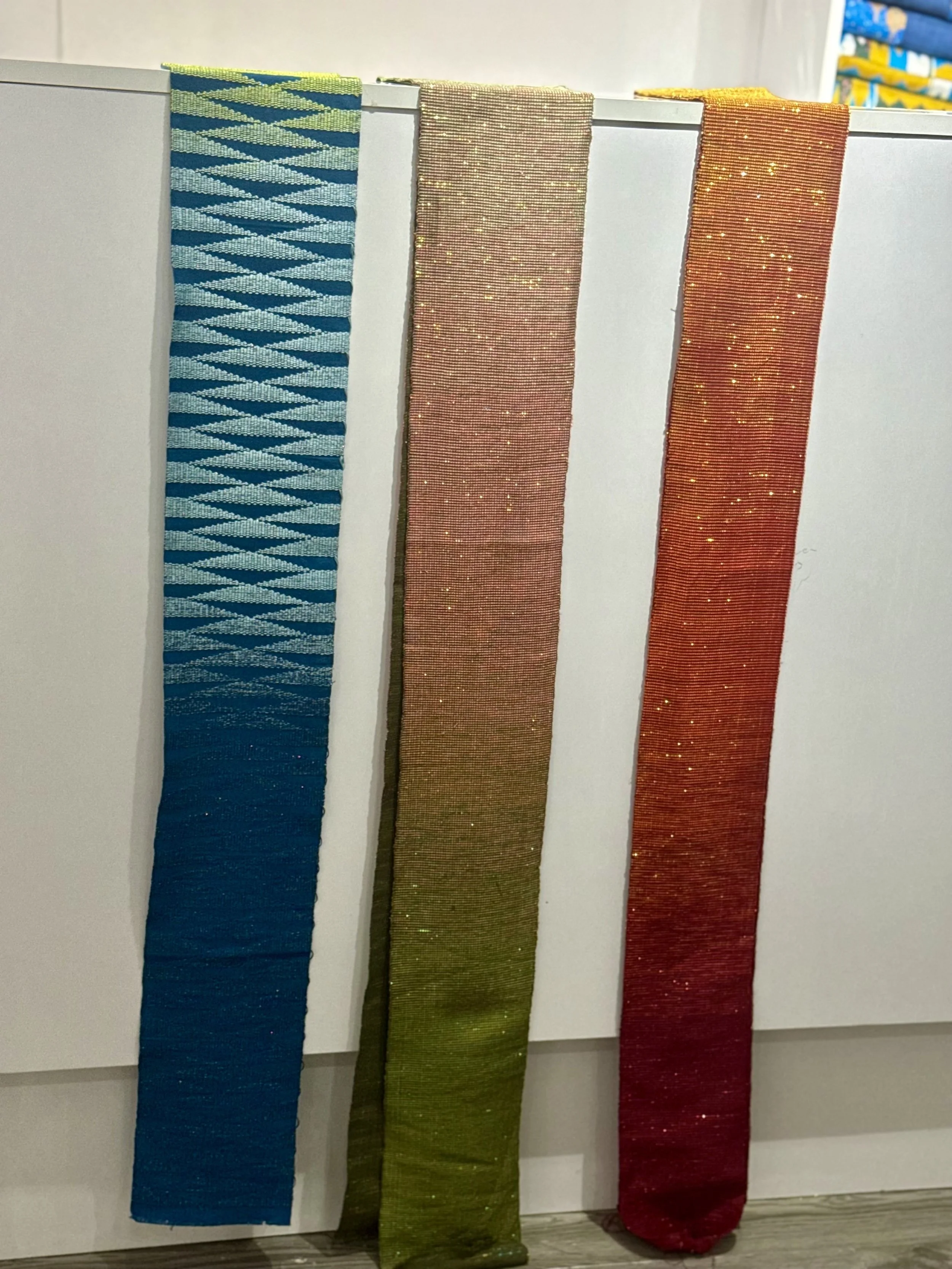
Strips of ombré kente from Afya’s Klosset.
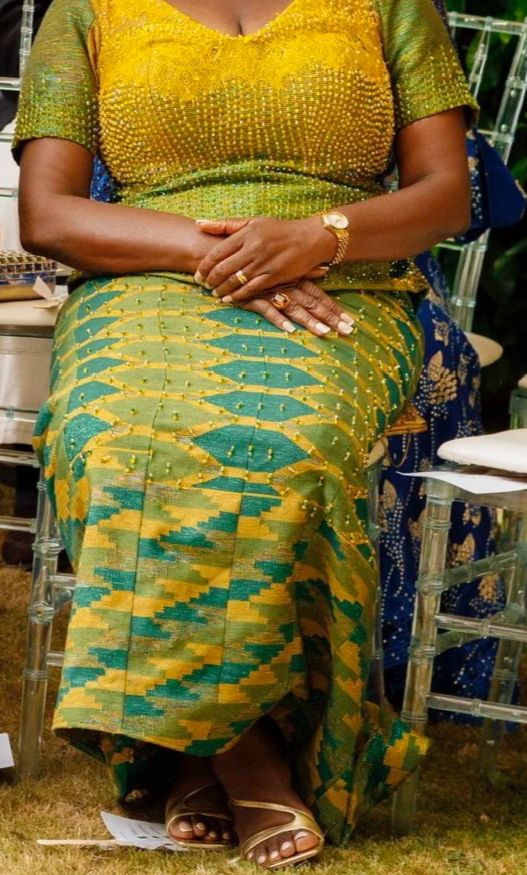
Picture of a Mother of the Bride in an ombré kente top and a patterned skirt .
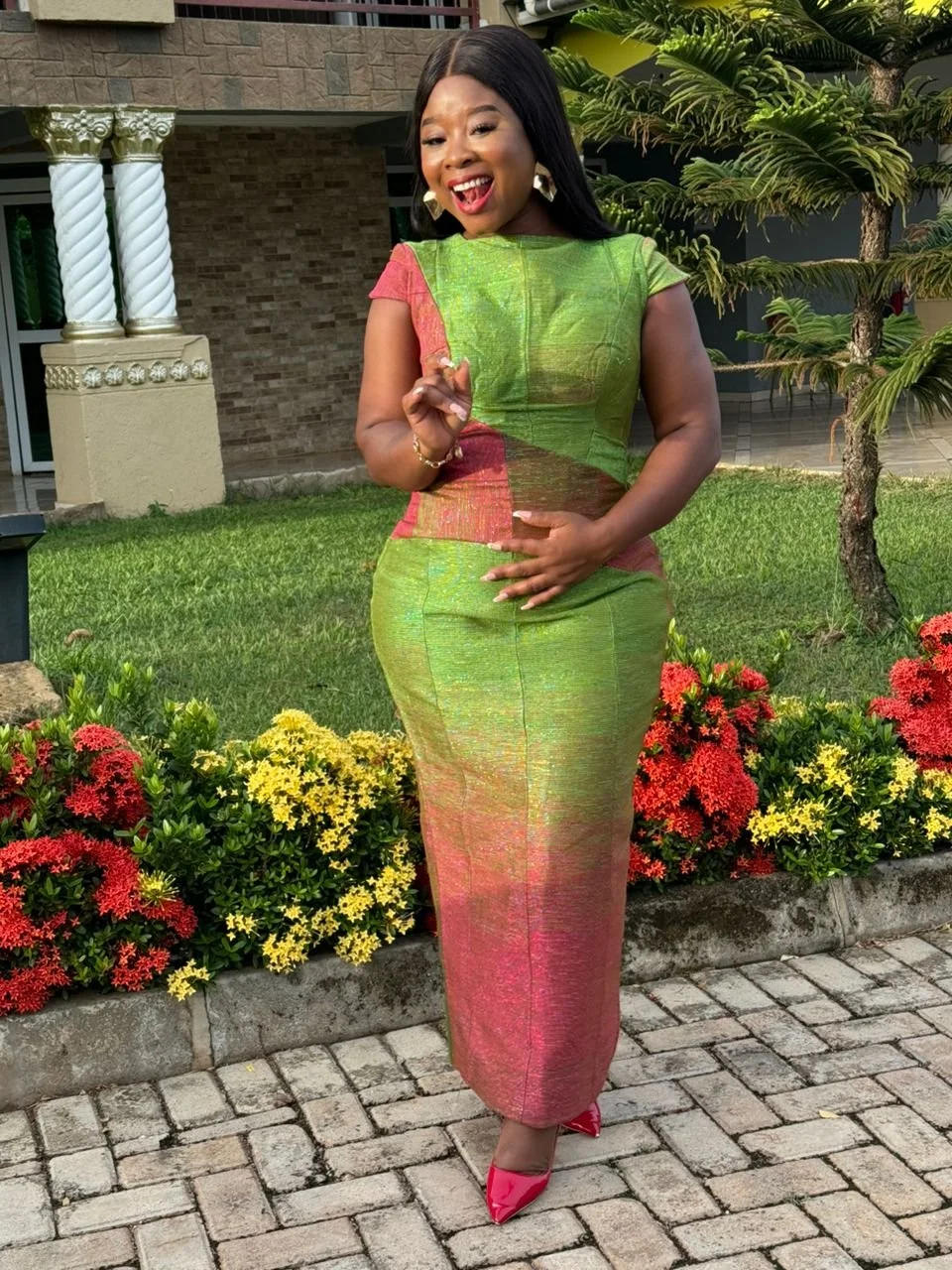
Picture of Afya in a full ombré kente .
Q: You look at kente everyday, in your view what makes a good bridal kente and a befitting kente for a groom?
Good question. Because I look at kente every single day, I’ve come to believe that what really makes a good bridal kente, or a befitting one for a groom, starts with understanding the person wearing it. The first thing I always consider is complexion. Colour is key. Before we even talk about patterns or styles, I look at what colours will truly complement the bride or groom. When clients come into my shop, that’s one of the main things I focus on, because the right colour can completely transform how the kente looks on you.
From there, we look at the pattern they like and, of course, the style it will be sewn into. For brides, selecting the right pattern is very important, it needs to be flattering, elegant, and complementary to the overall look. For grooms, colour, pattern, and fabric type are absolutely key. At Afya’s Klosset, we don’t compromise on fabric quality at all.
In my view, when it comes to men, I would never recommend ombré kente for a groom – it’s just not something I encourage. A groom’s kente should have a strong, defined pattern. If a bride is set on wearing ombré , what I usually do is select a patterned kente for the groom that incorporates similar colours, so the couple still looks cohesive while each outfit stays true to its role.
At the end of the day, the purpose of wearing kente is to promote our culture and heritage. That’s why, as a kente vendor, there are certain fabrics I would never recommend to my clients. My goal is always to guide them toward choices that honour the tradition and make them look their best.
In fact, just this week I felt so fulfilled because I helped a couple choose the perfect combination – the bride went with ombré and we found a beautiful patterned kente for the groom. Seeing how happy they were, knowing they’ll look amazing together on their big day, is what makes what I do truly worthwhile.
Q: What are your tips for choosing the colour of your kente and coordinating with your bridal party/family?
When it comes to choosing the colour of your kente and coordinating with your bridal party or family, the first thing to consider is the bride and groom themselves. Their colours and patterns always come first. I look at skin tone, the overall wedding colour palette, and what colours the couple is naturally drawn to. All of that matters before anything else.
We don’t always work directly with the bridal party, but on our end, we make sure the colours you choose for yourselves are well thought out and coordinated. One thing I always advise is this: the bride should never wear the exact same colours as the bridal party or family. The goal is for the couple to stand out. For example, if the bride’s kente has green in it, the green doesn’t need to match the bridal party exactly, it needs to complement it. So if the bride is wearing emerald green, the bridal party could wear sage green or olive green instead.
It’s all about looking at the colour palette as a whole and choosing shades that work well together without competing. We aim for coordination, not duplication. That way, the bride and groom remain the focal point, while the bridal party still looks unified and beautiful with a shared pop of colour. The end goal is for everyone to feel confident, comfortable, and well put together without the bride ever feeling lost in the crowd.
Q: Are there any Ghanaian businesses you would like to give a shoutout to?
I’d really love to give a big shoutout first and foremost to our artisans. These men and women are working so hard and they are incredibly creative. When we talk about intelligence and skill, our weavers deserve so much more recognition. If you’ve ever stood by a loom and watched how kente is woven, you’ll be completely amazed. It’s woven in strips, so the level of creativity and vision it takes to foresee how all those strips will come together into one complete cloth is truly remarkable and that cannot be overstated.
I also want to say a heartfelt thank you to the fashion houses and designers. The kente may be woven by our artisans, but the way people see and fall in love with kente today is largely because of how designers bring it to life. Their creativity, silhouettes, and styling are what make the fabric so appealing to customers and help showcase its beauty in modern ways. They play a huge role in promoting Ghanaian culture through their work.
And to my fellow kente vendors, I see you. We are all in this together, working towards the same goal of promoting our culture and heritage. No single kente vendor can serve the entire world, we operate as a collective, each playing our part in keeping kente alive and celebrated globally.
At the end of the day, kente is not just a cloth. It is a fabric of celebration.
— Afya Serwaa
I know you’re very busy, so I really appreciate you taking the time to sit down and speak with me! This has been incredibly informative and truly interesting.
Thank you and thank you as well! We genuinely appreciate the work you’re doing too.