Made in Ghana: George Bannerman
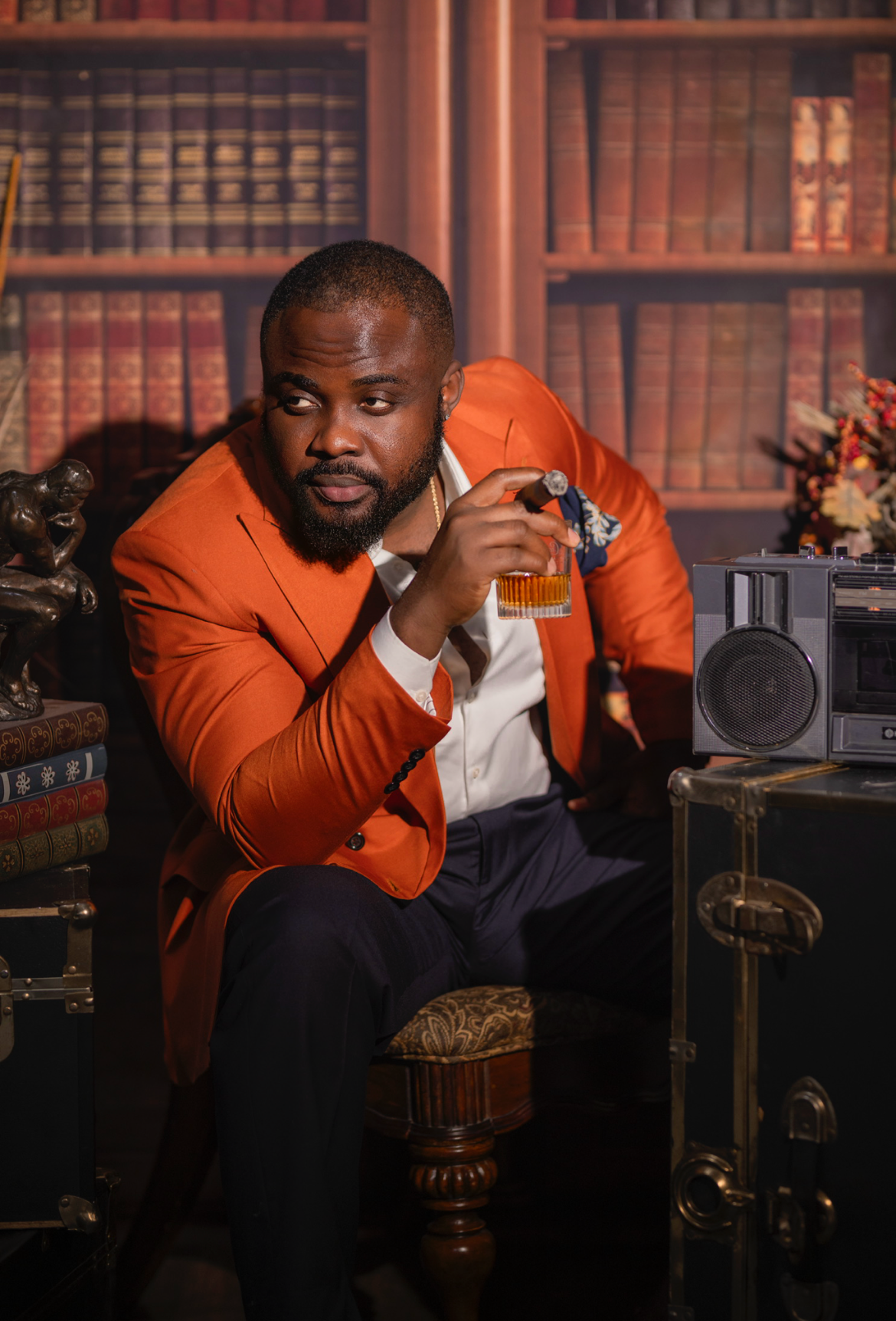
From wondering where his next meal would come from in 2016 to being flown across the world to host weddings in Brazil, George Bannerman shares his journey into the MC profession. He reflects on the skills the job truly requires, the wedding trends he’s ready to see go, and the fellow creatives making waves in the events sphere.
Background: After my wedding, a South Asian friend mentioned how cool it was that we had an MC. I was surprised he even noticed, I assumed having an MC was standard. But after asking around, I realised that while many cultures use MCs, treating the MC as an essential, non-negotiable vendor is especially common in Black communities. MCs don’t just narrate the day; they coordinate with all the other vendors, entertain guests, manage the energy in the room, and help smooth over any delays. If you follow the Ghanaian wedding scene, you’ve almost certainly heard of George Bannerman — “The Man with the Steeze.” Now based in the DMV, he spoke with us earlier this month about the true role of an MC, the trends he thinks should quietly retire, the misconceptions people hold about his craft, and the rising MC talents who deserve more shine.
This interview has been edited for clarity.
Full Name: George Bannerman
Age: 35
Based: US, Ghana
Q: Talk me through your journey — how did you get into MC’ing?
Honestly, getting into MC’ing was never part of the plan. Back in 2016, I was in Ghana, fresh out of tertiary education, moving from place to place and job to job just trying to survive. One day a friend calls me from Canada and says, “I’m getting married.” I thought, “Great, wedding jollof is coming!” only for her to add, “Oh no, I’m not just inviting you… I want you to be my master of ceremonies.”
I said, “Master of what? What even is that?” She explains it’s just MC’ing and I’m like, “Ah, why didn’t you just say MC?” But I’d never done it before and I didn’t know what it involved. So I accepted her invitation to attend but definitely not to MC.
Fast forward to the wedding. I’m there enjoying the food and the music. Anytime bofrot passed, I took some, because in those days I wasn’t working and food couldn’t just pass me casually. Then my friend comes up to me saying the MC hasn’t shown up. Everyone at the table slowly turns to look at me, and that’s when I knew it was on.
I said a quick prayer: “Lord, please brighten the path I’m about to walk,” grabbed the microphone and went on stage. “Ladies and gentlemen, my name is George Bannerman. I’ll be your MC today. If you need anything, talk to me.” “If you want to find the food station…”
“Talk to me!” the guests replied.
“If you want to see the bride and groom…”
“Talk to me!”
It turned into this playful call-and-response that relaxed me completely. I introduced the bridal party, then the couple, and everything flowed as if we had rehearsed it.
After the wedding, people started approaching me for bookings. My friend paid me $300 or $400 CAD and meanwhile I hadn’t seen 500 cedis in one day for about six months. That’s when I said, “Okay, maybe this is a thing.” But getting started was tough because people didn’t know me and didn’t want to take a chance.
One thing about Ghanaians is that we don’t like change. Everyone had their usual MCs. I’d call people saying, “Hi, I’m an MC, if you’re having an event I’d love to host it…” then *click.* So, I decided to build my skills by working for free. I did around 30 to 35 events without taking a pesewa and sometimes without eating. There was one wedding in Dawhenya where I joined the food queue and the planner said, “The food is for guests only.” And remember, I was walking to most bookings, getting covered in dust and after the event some guests would drive past me, shout, “MC, God bless you, you were too good!” but still not offer me a lift.
My 35th event was my cousin’s wedding. I arrived on a hoverboard, dancing to Shatta Wale’s Kpuu Kpaa for my entrance. The video went viral and suddenly my phone was blowing up.
I always knew my time would come and when it did I was grateful because I had put in the work. And not to brag, but I’m pretty sure I was the first MC to bring dancing into the performance.
Q: What’s the moment you first realised, “Oh yeah, I can command a crowd”?
Honestly, my friend’s wedding in Canada. The moment I heard my voice coming through the speakers, something clicked. I’ve always been a people person, someone who can get along with anyone, so it felt natural.
Even in school I was that kid. I ended up becoming a school prefect who entertained the whole compound with dancing and jokes. In Ghana we used to have “Our Day,” the last day of school when everyone brought food and we would just jam. I used to have entire assemblies dancing and singing. And mind you, this was after I’d been suspended so I didn’t even have a manifesto when prefect elections came around, but people still believed in me. They knew my personality carried weight.
So I think my friend saw all of that in me. She trusted that I could engage an audience and she knew I’d be the right person to handle her 200-guest wedding. That’s really when I realised, “Yeah… I can do this.”
Q: What’s one misconception people have about MCs that you wish you could fix?
People think MC’ing is a science but it’s really an art. Just because someone speaks well, or is charming, or is funny, doesn’t automatically make them a good MC. My friend saw something in me – something natural – and trusted me with her wedding. For me, it felt easy the same way if you can’t draw, you just can’t. I simply had “it,” and by His grace I’ve been able to tap into that. Now, when I walk into a room people get excited. If you don’t have it, you don’t have it.
Someone once asked me how to get a deep voice like mine and how to entertain guests, and the truth is, these are things I just have and can do. I don’t plan scripts before events. All I need is the itinerary. I have to see the guests first because not all crowds are the same. What works for one audience won’t work for another. You need to gauge the room, read the energy and adapt — that’s art, not science.
So if you have an event and you’re thinking, “Oh, my uncle speaks well and he’s funny, he can MC” no no no, those days are over. You need a professional. And honestly, the one vendor who can make or break your event is the MC.
Q: That’s really interesting. In a previous interview at the Bridal Showcase, you said that guests only remember two things from a wedding — whether it was fun or whether it was boring — and that it all comes down to the MC. Does that still hold true today, even with great DJs and all the other vendors involved?
Absolutely. I’d still say about 80% of an event’s success comes down to the MC and the remaining 20% is shared among the other vendors. The caterer can’t entertain anyone. Even if the food isn’t great, a good MC can get people on their feet, laughing, dancing, and by the end they’ll forget all about the jollof that didn’t hit.
I’ve even done an event where the caterer didn’t show up. The bride was panicking but luckily, on my way to the venue I’d passed a roadside BBQ stand, so I told her, “Let’s book them.” We had kebabs grilling all night, the guests loved it, and nobody knew anything went wrong. I kept the energy up and an event that was supposed to end at 10 p.m. ended at 1:30 a.m. That’s the power of the MC.
Why? Because the MC is the one speaking. You’re representing two parties: the couple and their families, and the vendors. You can make both sides look good or bad. Your job is to keep anything happening backstage from spilling into the guest experience.
Another thing people need to understand: weddings, unlike marriages, are not really about the bride and groom, they’re about the guests. These events are performances. The word “reception” literally means you are receiving guests, which is why you hire all these vendors: the caterers, the DJ, the MC. When the guests have a great time, that is where the fulfillment comes from.
MCs fail when they focus only on the bride and groom while the crowd is on their phones. That’s not the job. We are performers and the guests are our audience.
Q: This idea of weddings as a performance is fascinating. When I think about Black weddings, especially African ones, they feel very different from the weddings of other cultures. Do you think that sense of performance is specifically a Black thing?
I think it’s deeply tied to Ghanaian and African culture in general. We care a lot about how we’re perceived. Your mother will make sure every detail is perfect because she doesn’t want anyone speaking badly about the event afterward, we see the wedding as a reflection of the family.
Our approach to weddings is rooted in hospitality. In fact, I’d say a lot of people around the world now look to Africa for how weddings should feel. The Middle East also understands this very well. They know how to host. In places like Lebanon, the MC might literally descend from the ceiling, it’s like watching the Oscars.
And consider how Africans dress for weddings. Guests get custom-made outfits, we comment on each other’s looks, we go all out. It’s cultural. We like to look good and we care about the impression we make. That’s a big part of why our weddings feel like a full performance because in many ways, they are.

“Dancing also breaks the ice. Some guests won’t move unless someone leads, so yes, I’m always dancing. If I don’t dance, who will? My job is to entertain.”
Q: How do you mentally prepare before hitting the mic?
First, I pray. I ask God to brighten the path I’m about to walk and to let me use the moment for His glory. One scripture I always hold onto is Proverbs 16:9 – “I, the Lord, will order your steps.”
Then I clear my mind. Whatever I’m going through, anything that isn’t conducive to the event, I push it aside. When I first started, there were days I didn’t even know where my next meal was coming from but once I picked up the mic, I had to leave all of that behind. My focus had to be the room, the energy, and the people I was there to serve.
Q: Do you think you have to be a music head to be a good MC?
Absolutely. It’s the one real prerequisite. You have to know music, the dances, the lyrics, the vibe, because when someone asks for something, you need to catch it instantly. That’s why we all know the dance to Medikal ft Shatta Wale & Beeztrap KOTM’s - Shoulder. We learnt it because the job demands it. I might be too old for some of these new moves, but every crowd is different and you have to meet them where they are.
Dancing also breaks the ice. Some guests won’t move unless someone leads, so yes, I’m always dancing. If I don’t dance, who will? My job is to entertain.
I once had a celebrant change their entrance song to Let It Be, and when I told the DJ, he didn’t know it. I had to clarify, “The Beatles.” Moments like that show why you need to know music from every era. At the end of the day, a party lives or dies by the music and the dancing.
Q: Do couples often ask you to recommend DJs? I imagine chemistry between the MC and DJ is important.
They do and of course it’s easier when I already have a good relationship with the DJ. But I never force my preferences on a couple. If they ask for my honest read on a DJ, I’ll give it.
I always like to speak with the DJ beforehand because a DJ can make an MC look bad. As the MC, I’m constantly signalling: change the song, lower the volume, cut the track. If we’re not in sync, the whole energy drops.
DJs also have to read the room. I once did a 16th birthday party and the DJ came with music for 50-year-olds – great songs, but not for teenagers. I told him to play Miley Cyrus and instantly all the kids rushed up and started singing with me. That’s why reading the room matters. No two audiences are the same.
Q: If you could choose the ultimate “walk-on song” to make an entrance as an MC, what would it be?
Gosh, there are so many great options! I love classic songs that instantly resonate with people:
December, 1963 (Oh, What a Night) – Frankie Valli & The Four Seasons
Stand By Me – Ben E. King
For a birthday party entrance:
Feeling Good – Nina Simone (or the Michael Bublé version)
I Got You (I Feel Good) – James Brown
Old classics are the best, the rhythm, the instrumentation, the vibe, even if people don’t know the song, they feel it.
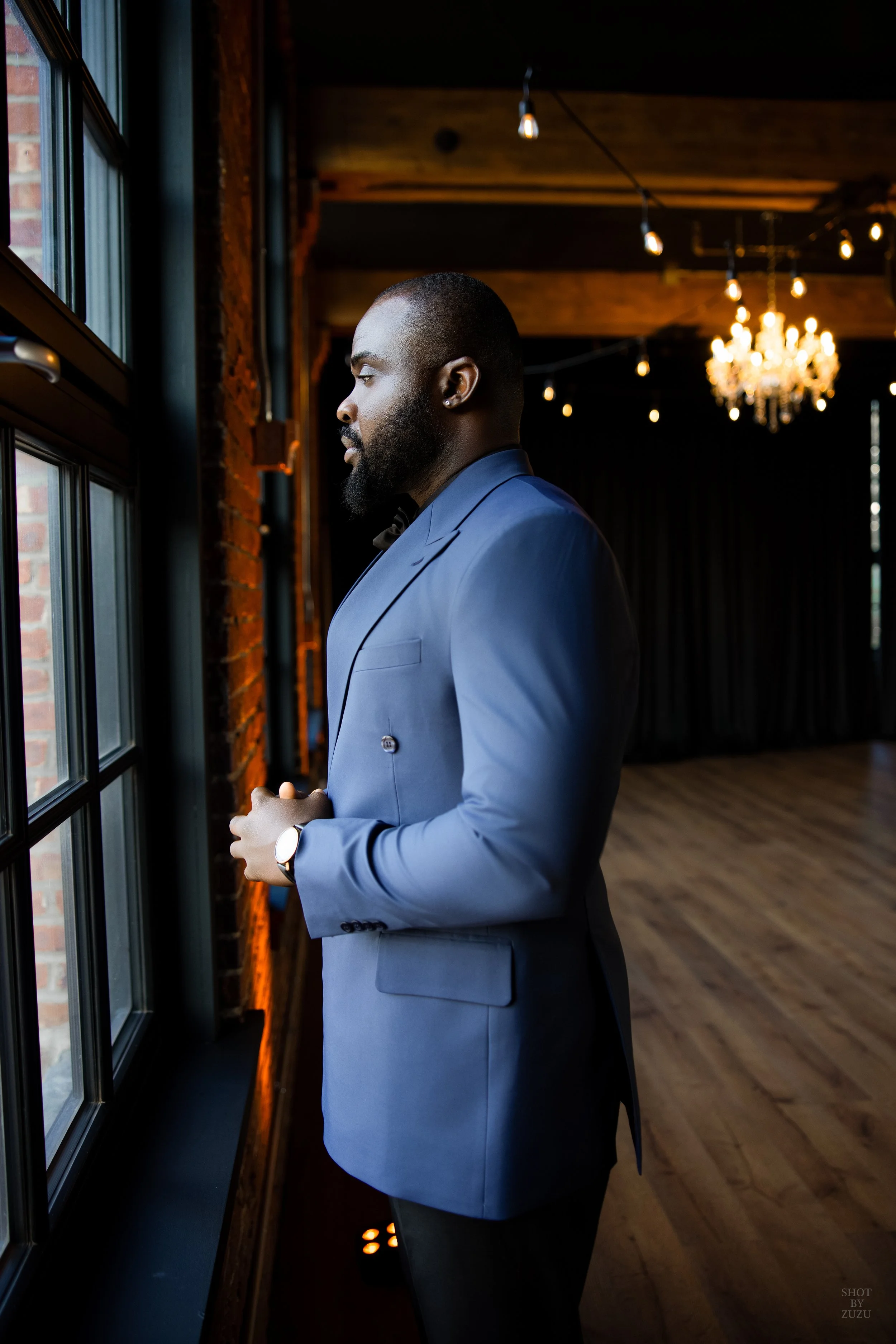
“When I first started, there were days I didn’t even know where my next meal was coming from, but once I picked up the mic, I had to leave all of that behind. My focus had to be the room, the energy, and the people I was there to serve.”
Q: Would you ever become an okyeame? Do you see the skills as transferable?
Even though I’m somewhat bilingual, I’m not fluent enough, and okyeame work involves a lot of customary rites that I’m not fully familiar with. Every tribe has its own traditions and you really need to study them to know what you’re saying.
I’m happy to join the groomsmen, make an entrance, introduce the groom, or maybe lead a hymn, but I wouldn’t venture into the customary part. It’s not just about the language, even if the bride or groom don’t speak a Ghanaian language, it could be done in English as long as the rites are respected.
Personally, I prefer the party side. I’ve never seriously considered doing the okyeame role.
Q: Aware you are currently based in the US, but what is your event split, how many weddings do you do in the US versus abroad (including Ghana)?
Yes, so I am based in the DMV and last year I did 15 events in Ghana, but most of my work this year has been in the US, with some events in Brazil and Europe. Next year, I have bookings in Italy, Sweden, and Copenhagen.
My events have expanded beyond just Ghanaian weddings — I’ve done Liberian, South African, and Nigerian celebrations. I started in Ghana, but I’ve been able to spread the brand globally and earn a reputation as “the MC guy”. I’m proud of how far I’ve come and how MCing has opened doors into other opportunities.
I never promote my social media at events, but guests often tag me and I repost. For me, it’s all about two R’s: reputation and recommendation. Word of mouth is the best marketing, and social media becomes the portfolio that showcases it.
Q: In your view, what are the three vendors that need to be prioritised when booking an event?
After booking the venue, the next most important vendor is your MC. Unlike other vendors who can send representatives – like a florist delivering flowers or staff setting up décor – the MC can’t be replaced. You need the MC.
The third is the DJ, for the same reason. Both the MC and DJ set the tone of the event, and neither can delegate their role.
That’s why they call it the “Master of Ceremonies.” A wedding planner or coordinator might have a stressful day or slip up, but a skilled MC can keep the energy up and make everything look seamless. So for me, the essentials are:
1. Venue
2. MC – cannot send a representative
3. DJ – cannot send a representative
Q: What’s the funniest or most unexpected thing that’s ever happened on stage while you were hosting?
The most unexpected moment was about seven years ago. I was hosting a wedding, waiting for the groom to arrive, when I was told he had passed away. Naturally, as the MC, I had to break the news to the guests. That was one of the toughest moments of my career.
On the lighter side, one wedding involved an 8-month pregnant woman turning up claiming the groom was the father. She tried to humiliate him and create a scene. I told her, as hard as it was, she needed to move on, the wedding would likely go ahead regardless. That’s when I realised it’s not just in the movies, people really do try to object at weddings. Years later, she had her own wedding and she asked me to be the MC!
Q: Which MCs (local or global) do you think are underrated and deserve more shine?
MC Extraordaire and Mahalia Bamford are both very talented and deserve more shine!
Q: What’s one trend in event culture right now that you love and one you wish would quietly disappear?
I love formation dances, they bring so much energy and unity to an event.
The trend I wish would disappear is the game where the groom is blindfolded and has to find his bride by touching women’s hands. I see it all over social media, but it’s too risky and really shouldn’t be happening.
Q: What’s the best piece of advice you’ve ever received about working a crowd?
Read the room. Every audience is different. God gave me that advice and it stuck: what works for one crowd may not work for another.
Q: The Man with the Steeze – how did you come up with that?
A friend gave me the nickname. I asked, “What does steeze mean?” He said, “Style made easy.” At first, I thought he made it up, but it’s actually a thing. He said I make difficult things – like commanding a crowd or busting a move – look effortless. I liked it so much, I started calling myself that too!
Q: If you could give one message to upcoming MCs trying to break through, what would it be?
Before diving into masterclasses or training, ask yourself if you have the natural ability. Being an MC isn’t just about the hype or the money, it takes real skill to engage and entertain. You can train and refine your craft, but if you don’t have that innate art, you don’t have it. Know yourself, be honest and if you have it, then train to perfect it.
Q: Are there any Ghanaian wedding businesses that you would like to give a shoutout to?
Reggies Makeovers, is still doing her thing and killing it.
Pistis, still doing tremendously well.
Shapes By Nelson is doing amazing.
Dave Lamptey is doing tremendously well.
I am sure there are others that I am forgetting because there are so many Ghanaians doing amazing things, let’s all meet at the top!
Thank you so much for speaking with me! Even this conversation was incredibly entertaining so I can only imagine what you would be like hosting a wedding! Hopefully one day I will be able to see you in action.
Thank you, it was nice speaking with you too!